Reduce uncertainty
Focus inspection coverage on credible damage mechanisms and high-consequence tank zones.
 Request inspection
Australia's specialist tank inspection team
API 653 certified inspection for storage tanks—combining experienced inspectors, advanced NDT and practical engineering evidence to protect uptime, control repair scope and support return-to-service decisions.
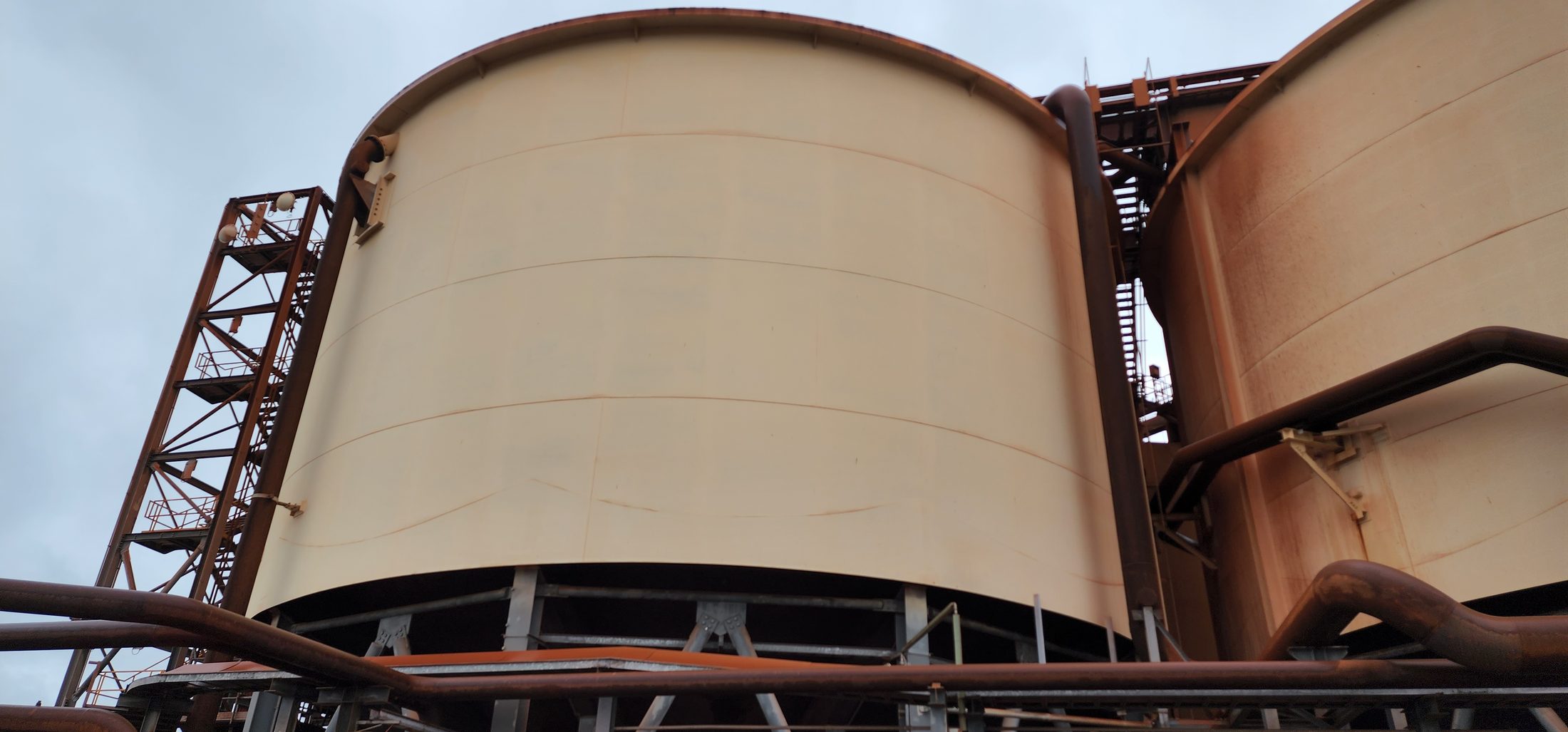
Management assurance
Inspection data only creates value when it helps your team decide what can remain in service, what needs repair, and what belongs in the next maintenance window.
Focus inspection coverage on credible damage mechanisms and high-consequence tank zones.
Separate isolated findings from broader degradation so work packs target the condition actually found.
Coordinate inspection methods, access and verification while the tank is available.
Deliver traceable evidence, clear priorities and a practical record for integrity review.
01 / Tank-specific scope
A tank inspection should follow the way the asset carries load, contains product and degrades—not a generic checklist. The inspection plan connects likely damage mechanisms to each critical zone.
Locate and quantify corrosion, pitting, cracking or leakage paths.
Assess shell condition, roof support, plumbness and settlement behaviour.
Organise traceable measurements for integrity and maintenance review.
Separate immediate action from monitorable degradation and planned work.
02 / Inspection strategy
Our API 653 inspection planning aligns tank condition, operating constraints, access and the required integrity decision—then selects the methods that can answer it.
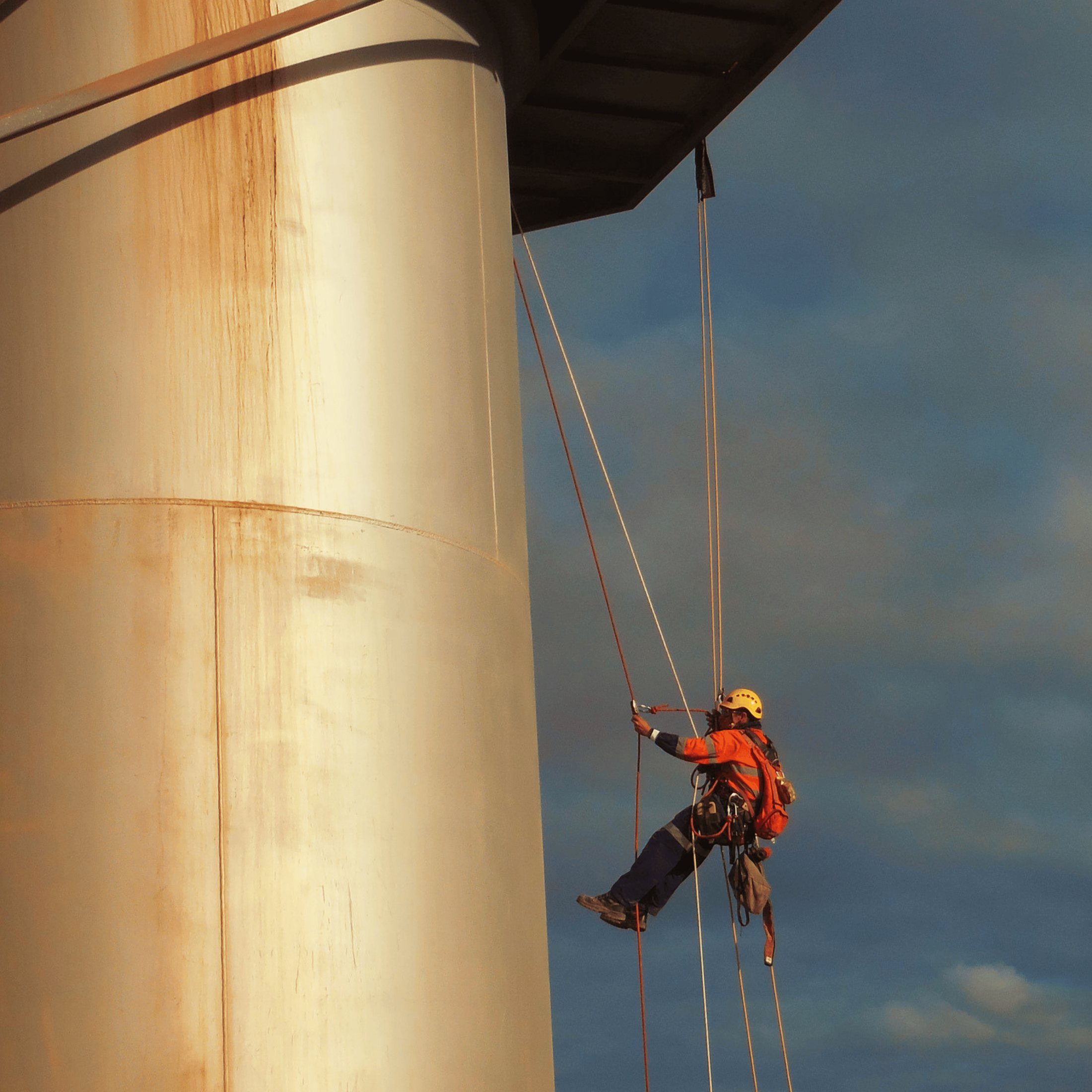
External examination and targeted non-intrusive data collection to understand visible condition, shell loss, settlement and emerging risk.
Internal access enables direct examination of floors, welds, internal shell surfaces, roof structure and corrosion morphology.
Document repair areas and final condition so the recommissioning decision is supported by a clear inspection record.
Code-informed inspection
API 653 certification is central to how Tank Inspection approaches in-service and out-of-service assessment: understanding the tank as a complete containment system and organising field evidence around condition, repair and continued-service decisions.
03 / Evidence package
No single technique answers every tank-integrity question. Broad screening identifies areas of interest; targeted methods quantify and verify the condition.
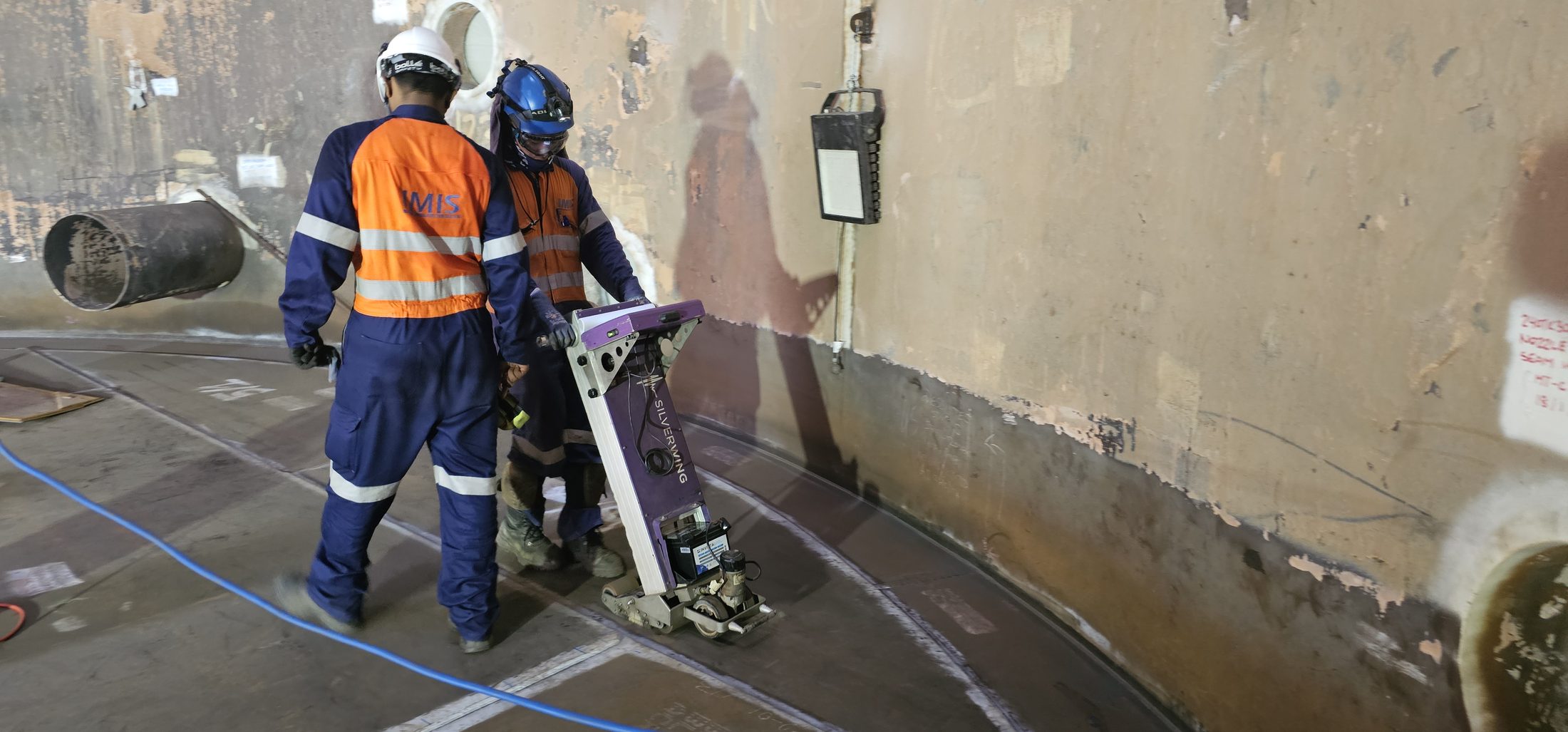
Magnetic flux leakage highlights localised volume loss across carbon-steel floor plates for targeted follow-up.
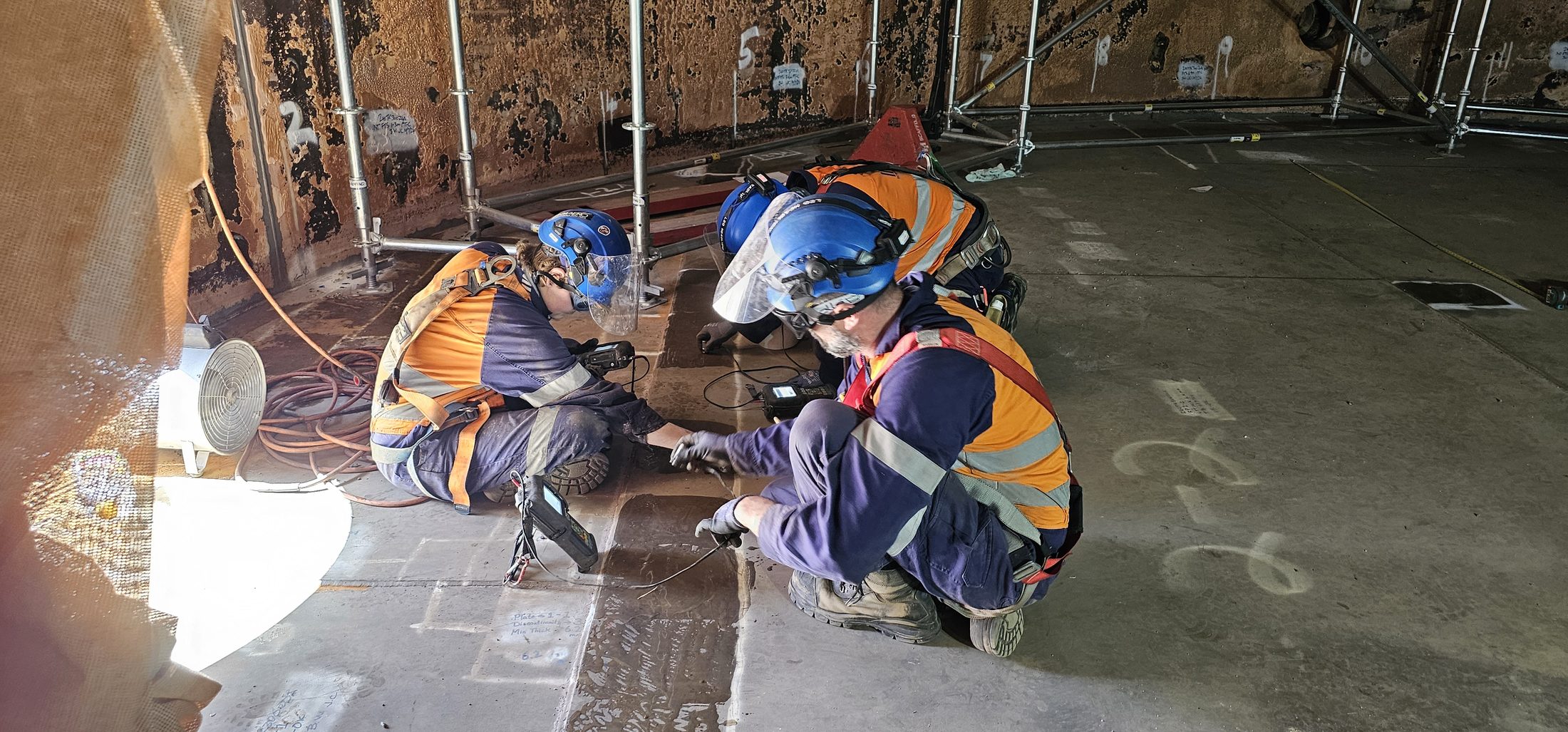
DECISION: WHERE IS METAL LOSS CONCENTRATED?Ultrasonic measurements support local verification, shell profiling and repeatable corrosion monitoring.
DECISION: HOW MUCH WALL REMAINS?Level, plumbness and dimensional evidence identifies distortion or foundation behaviour requiring engineering review.
DECISION: IS THE TANK GEOMETRY STABLE?Visual, magnetic particle, penetrant, vacuum-box or weld examination is selected around the indication and component.
DECISION: WHAT DOES THIS LOCAL CONDITION MEAN?Real field capability
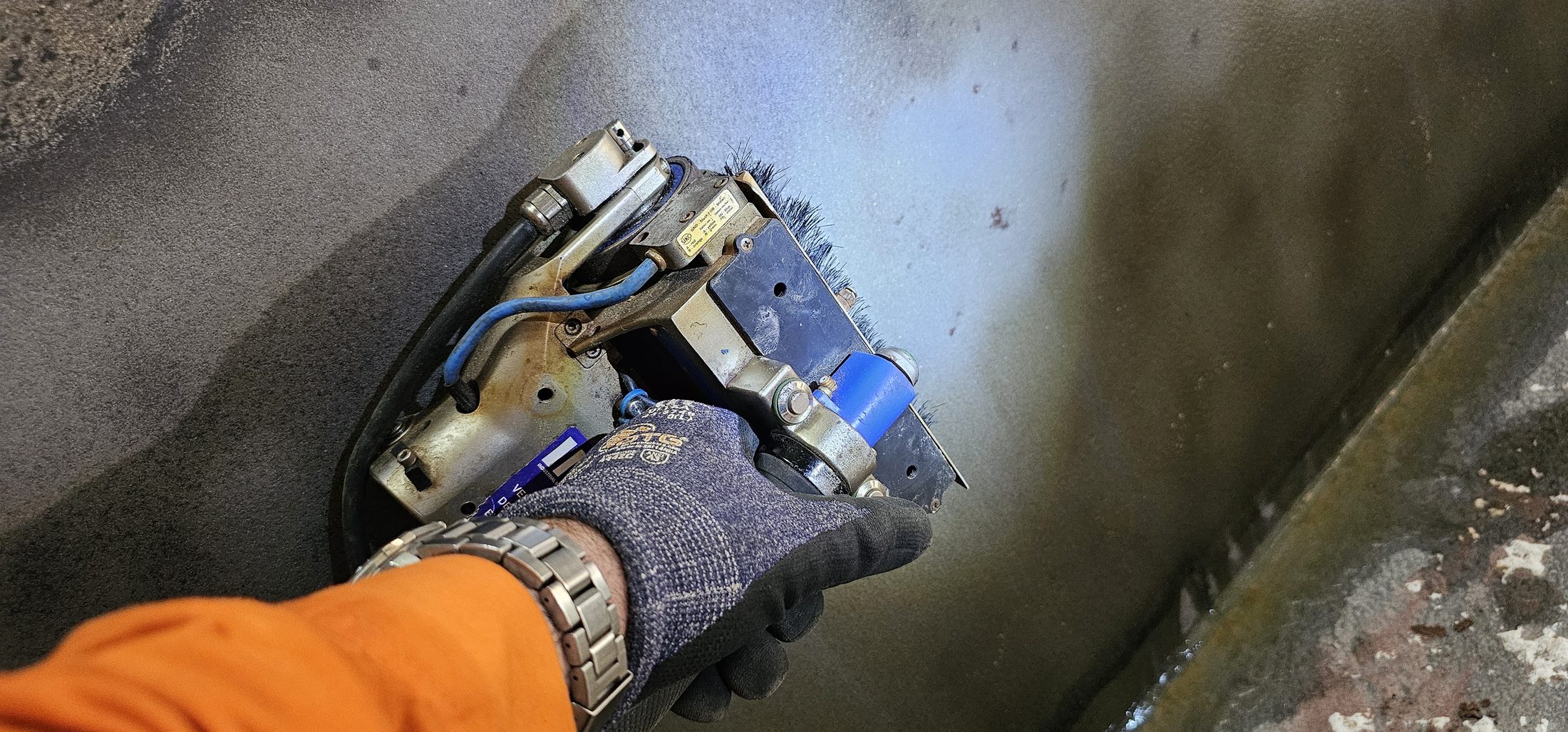
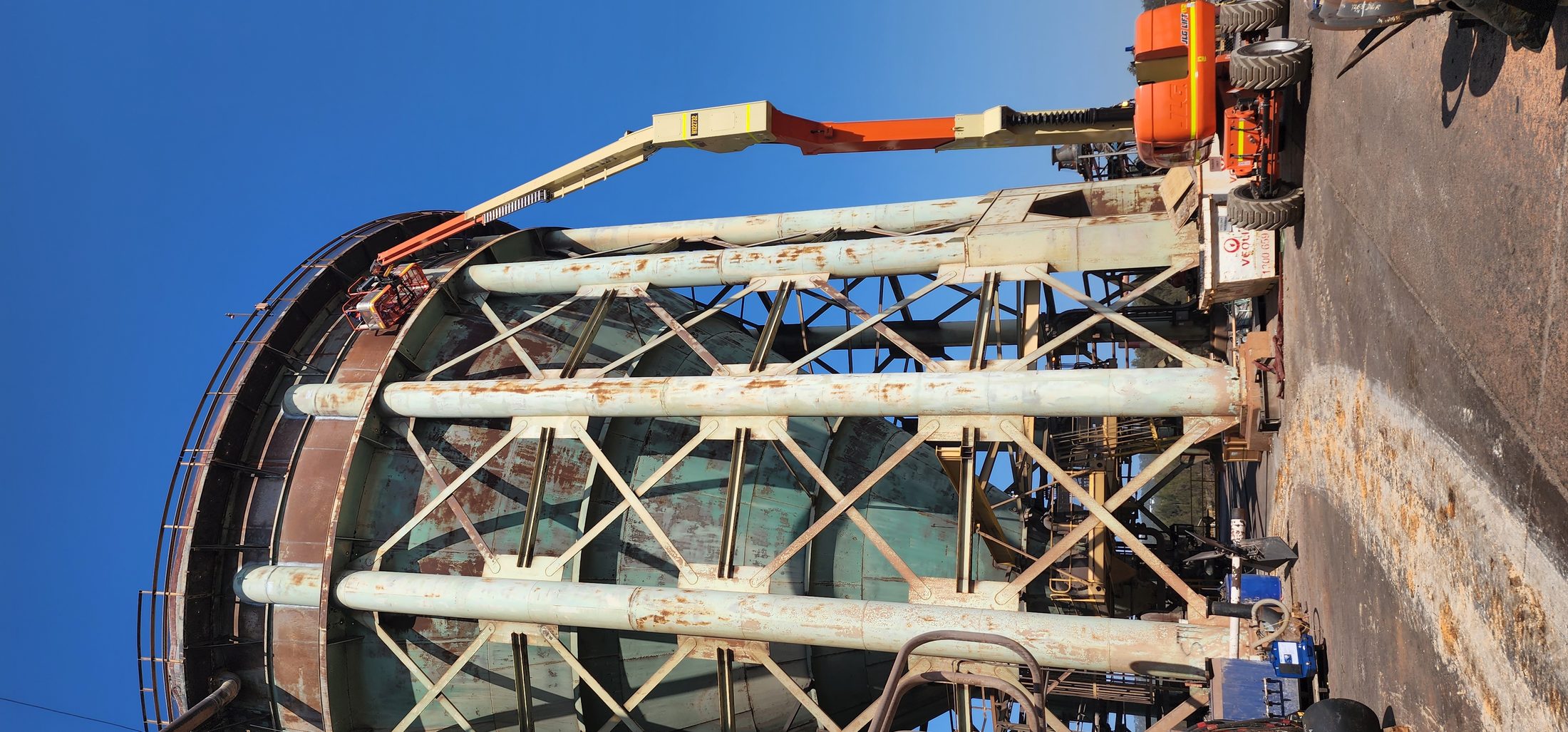
Real project evidence demonstrates the range of access, inspection environments and advanced equipment available to support tank integrity work across Australia.
04 / Service environments
The stored product, water bottoms, temperature, coating system, foundation and operating history shape what should be inspected and where.
 01Fuel + petroleum
 02Chemical storage03Mining + minerals
 04Water infrastructure
 05Industrial processing
05 / Project sequence
A focused workflow keeps access, data collection and reporting aligned with the operational decision.
Tank design, product, history, previous data, shutdown state and governing requirements.
Inspection zones, access, cleaning condition, calibration, coverage and site interfaces.
Traceable visual, NDT and dimensional evidence referenced to tank locations.
Clear findings, limitations, priorities and recommended next steps for review.
Australia-wide tank inspection
Share the tank type, stored product, location, operating state, inspection history and required timing. We’ll respond with the next practical scoping step.